Most “best prostate supplement” lists rank whatever pays the most. We did something less exciting: we read each label line by line, compared the doses with the research, and matched each option to the kind of man it actually fits.
The short answer: no prostate support supplement has strong evidence for the urinary symptoms of an enlarged prostate (benign prostatic hyperplasia, or BPH), and the most famous ingredient — saw palmetto — performed no better than placebo in the largest trials. A few other ingredients (beta-sitosterol, pygeum, nettle root) have limited, mostly older evidence.
Before any supplement: new urinary symptoms in men over 50 deserve a doctor’s visit first. Frequent night-time urination, a weak stream or urgency can come from an enlarged prostate — but also from infection, diabetes, medications or, less often, prostate cancer.
If you still want to try one: use the “best for” guide below, and treat any money-back guarantee as your real test.
Our Picks at a Glance
| Option | Best for | Prostate ingredients with a disclosed dose | Cost per month* | Guarantee | Our score |
|---|---|---|---|---|---|
| TitanFlow capsules | Men who want classic prostate ingredients, each dosed | Beta-sitosterol 30 mg, pygeum 100 mg, pumpkin seed oil 500 mg, lycopene ~1.9 mg | $39–$69 | 180 days | 7.9 |
| Prostadine liquid drops | Men who specifically prefer drops | Saw palmetto inside an undivided 500 mg blend with neem oil | $49–$79 | 60 days | 6.7 |
| ProstaVive powder | Men whose real goal is energy or libido | Only nettle root, 200 mg | $39–$79 | 180 days | 6.4 |
| One ingredient | Trying a single studied ingredient with your doctor | Beta-sitosterol or nettle root products | Varies | Varies | — |
*Cost per month = price of one month’s supply on the official website: the lower figure is the largest (6-month) package, the higher figure the smallest package. Some packages add shipping. Prices and guarantee terms were checked on each official website on October 13, 2026. Confirm current terms at checkout.
About our score: it is the simple average of four criteria, each rated 0–10: ingredient rationale (are the ingredients and doses supported by research?), label transparency, value for money, and guarantee & refund risk. The score compares how well each product is formulated, labeled and sold. It is not proof that a product works: none of these finished products has been tested in a published clinical trial. How we chose and scored.
What the Research Actually Says (Read This First)
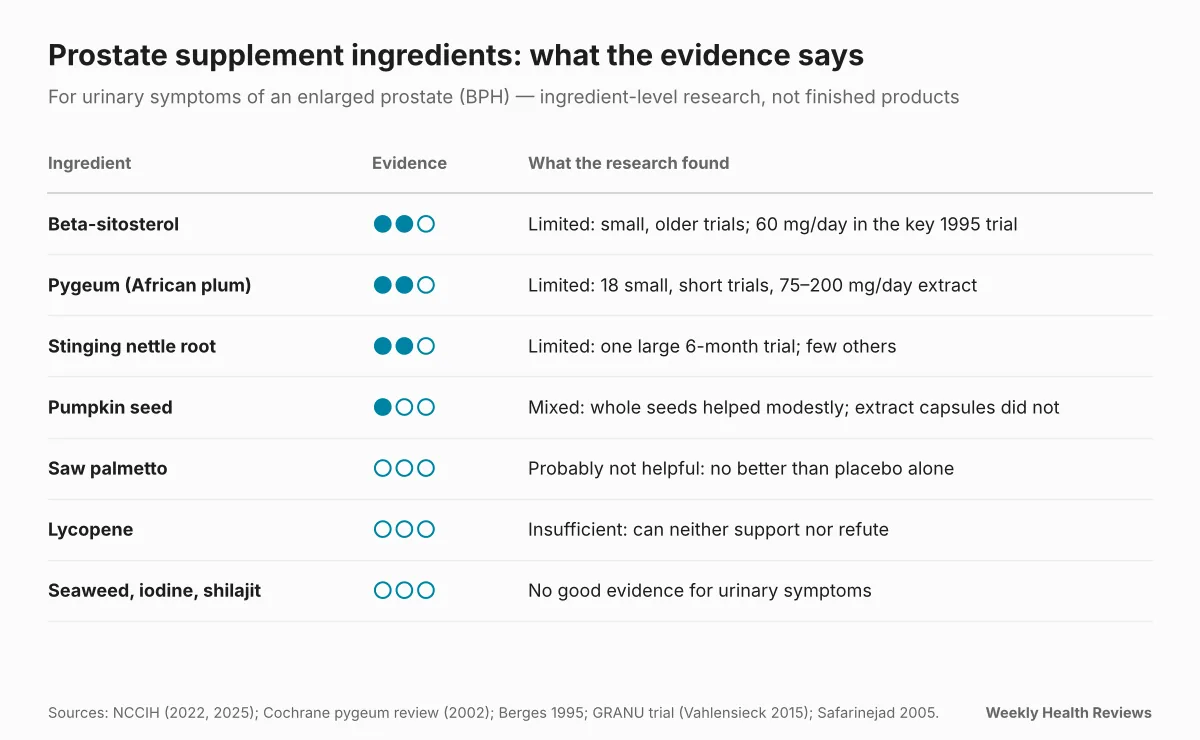
Every product below is built from ingredients that were studied on their own. None of the finished products has been through a published clinical trial. So the useful question is: which ingredients have evidence, and does the label give you a meaningful dose of them?
- Limited evidence: a few small or short placebo-controlled trials point to a modest benefit, but the research isn’t strong or recent enough to be confident.
- Mixed evidence: trials disagree — one form or dose helped and another didn’t.
- Probably not helpful: large, good-quality trials found it worked no better than placebo.
- Insufficient evidence: there are no meaningful trials for prostate-related urinary symptoms, so there’s nothing to rate.
Saw palmetto
The best-known prostate herb has the most disappointing record. The U.S. National Center for Complementary and Integrative Health (NCCIH) summarizes the evidence as probably not helpful for enlarged-prostate symptoms: a 2023 review of 27 studies found little or no benefit when it is taken alone, and two NIH-funded trials — one testing up to three times the usual dose — showed no improvement. On the plus side, it is well tolerated and does not appear to affect PSA readings.
Beta-sitosterol
In a 1995 placebo-controlled trial of 200 men, 20 mg taken three times a day (60 mg daily) improved symptom scores over six months. A 1999 Cochrane review of four short trials (519 men) reached a similar conclusion without finding any reduction in prostate size — but that review has since been withdrawn because it could not be updated, so the evidence is old and thin.
Pygeum (African plum bark)
A 2002 Cochrane review of 18 trials (1,562 men) called a standardized pygeum extract a possible option, at doses of 75–200 mg a day. The trials were small, lasted about two months on average, and used different preparations.
Stinging nettle root
A 2005 placebo-controlled trial of 620 men reported better symptom scores and urine flow over six months. It’s a single trial, and NCCIH still rates the overall evidence as limited.
Pumpkin seed
In the year-long GRANU trial of 1,431 men, eating 5 g of pumpkin seeds twice a day modestly improved symptoms compared with placebo, but capsules of pumpkin seed extract (500 mg twice a day) did not. The form matters.
Lycopene, seaweed, iodine, shilajit, pomegranate
These show up in many prostate formulas, but there is no solid evidence that they relieve enlarged-prostate urinary symptoms. Iodine also comes with a real caution for anyone with a thyroid condition.
Our Picks, Explained
TitanFlow
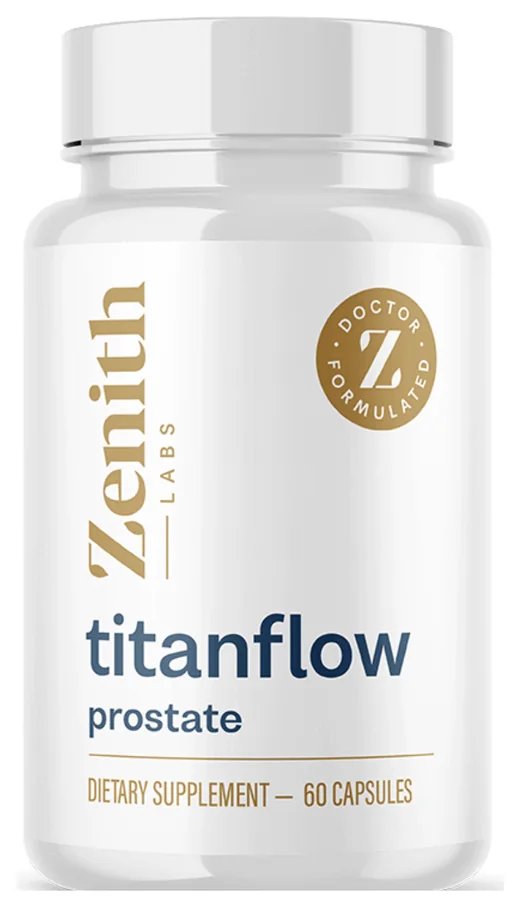
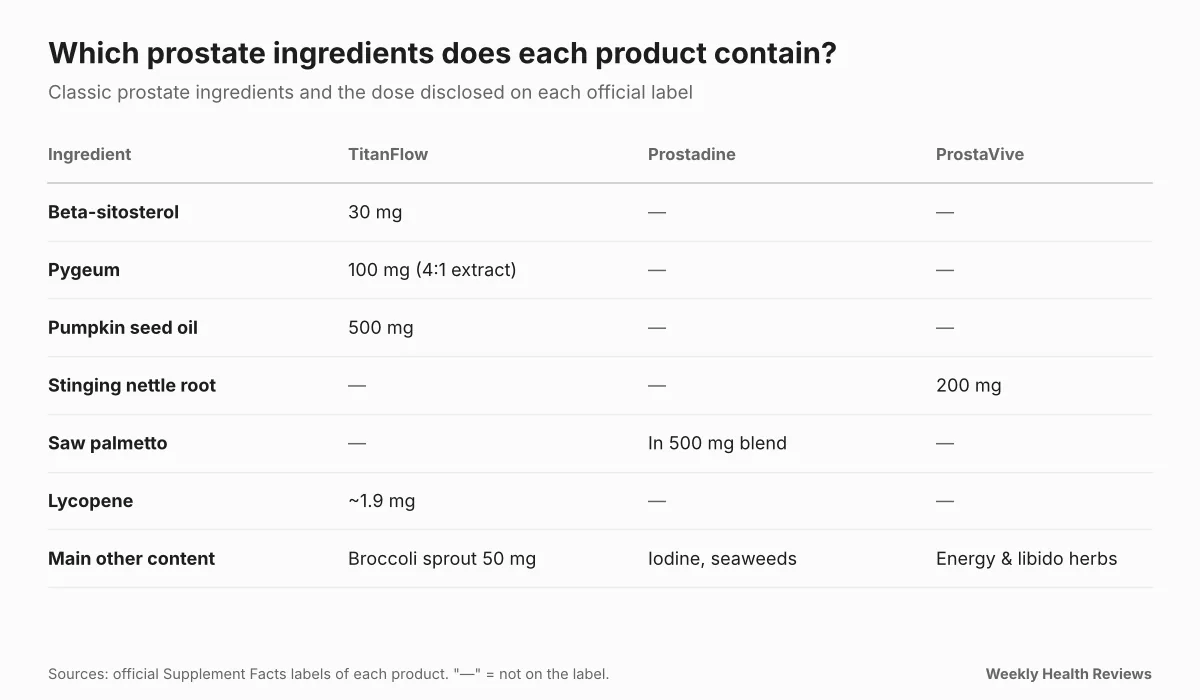
What it is: capsules from Zenith Labs, taken two a day, with five ingredients and every dose on the label: pumpkin seed oil 500 mg, pygeum extract (4:1) 100 mg, broccoli sprout extract (4:1) 50 mg, lycopene 5% 37.5 mg (about 1.9 mg of lycopene) and beta-sitosterol complex 30 mg.
Why it made the list: of the products we reviewed, it is the only one built around the ingredients with the most (still limited) research, and it discloses every dose. Its 180-day guarantee covers even empty bottles, according to the sales page.
What holds it back: beta-sitosterol is at about half the daily amount used in the main trial, the pumpkin seed is an oil rather than the whole seeds that helped in the largest trial, and the pygeum is a 4:1 extract rather than the standardized extracts studied. The sales page also leans on research and trials it doesn’t identify.
Our score: 7.9/10 — read our full TitanFlow review.
180-day money-back guarantee · Two capsules a day
Prostadine
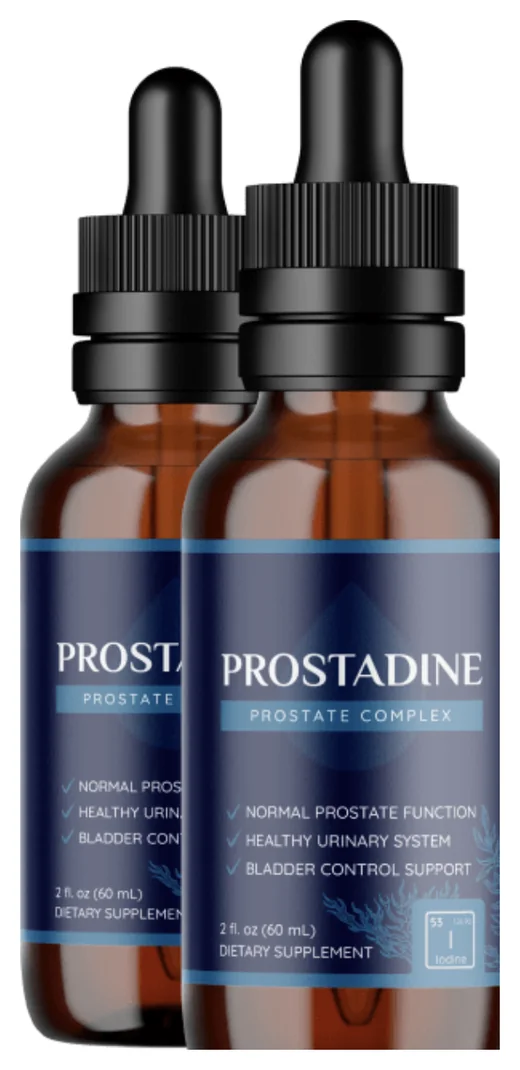
What it is: a liquid supplement taken as one dropper (2 ml) a day, sold only through its official website. The label lists iodine (275 mcg, 183% of the Daily Value), a 500 mg blend of neem oil and saw palmetto oil, four seaweeds at 10 mg each, and pomegranate and shilajit at 5 mg each.
Why it made the list: if you specifically want a liquid you can add to coffee or juice, it is the only liquid option we reviewed, it publishes its label, and orders are processed through ClickBank, the retailer, which also handles refund requests within the 60-day window.
What holds it back: its main prostate ingredient, saw palmetto, is the one the research supports least, and its dose isn’t separated from the neem oil. Six of the nine ingredients are present at 5–10 mg. The label itself states that the product’s safety “has not been determined,” and the iodine content means men with thyroid conditions should avoid it unless their doctor approves.
Our score: 6.7/10 — read our full Prostadine review.
60-day money-back guarantee · Sold only through the official site
ProstaVive
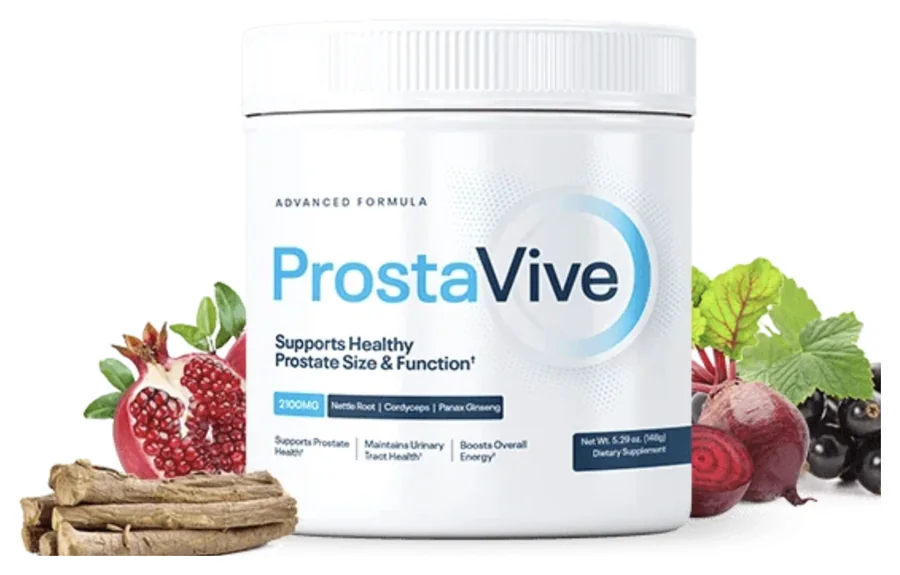
What it is: a daily powder whose label is mostly ingredients associated with energy, libido and testosterone (fenugreek, ashwagandha, maca, tongkat ali, cordyceps, ginseng, boron, zinc, vitamin D). Only one ingredient — nettle root, 200 mg — is classically associated with the prostate.
Our take: the label is unusually transparent, and the 180-day guarantee is generous. But despite the name, this is a men’s vitality formula, and NCCIH advises men with hormone-sensitive prostate cancer to avoid ashwagandha, one of its main ingredients. It may suit you if energy or libido is the real goal — read our full ProstaVive review.
For energy & libido goals · 180-day money-back guarantee
One studied ingredient, with your doctor
If you’d like to try a supplement, the ingredients with the most (still limited) supporting evidence are beta-sitosterol, pygeum and nettle root, sold as single-ingredient products in pharmacies. Taking one ingredient makes it easier to tell whether it’s doing anything — and easier for your doctor to check it against your medications. We don’t earn anything from this suggestion.
How We Chose
- Label transparency: are the prostate-related ingredients listed with their own dose?
- Dose vs. research: are those doses anywhere near what was studied?
- Claim honesty: does the marketing promise to shrink the prostate or replace treatment? (We don’t repeat those claims.)
- Safety: are cautions clear — iodine and thyroid, hormone-active herbs, blood thinners, prostate medications?
- Cost and guarantee: true cost per month and how long you have to ask for a refund.
The 0–10 score is the simple average of four of these: ingredient rationale (dose vs. research), label transparency, value for money, and guarantee. Claim honesty and safety are reported in each product’s section and review rather than folded into the number.
We did not buy or lab-test these products. Product photos are the manufacturers’ official images. Our analysis is based on the official labels, sales pages and published research, as described in our editorial standards.
When to See a Doctor Instead
- Blood in your urine or semen
- Pain or burning when urinating, fever, or pain in the lower back or pelvis
- Being unable to urinate at all — this is an emergency
- Symptoms that appear suddenly or keep getting worse
Also tell your doctor about any supplement before a PSA test or if you take blood thinners, prostate medication (such as tamsulosin or finasteride), thyroid medication, or blood-pressure medication. Your doctor can also discuss whether prostate screening makes sense for you.
Frequently Asked Questions
What is the most effective supplement for an enlarged prostate?
No supplement has strong evidence. Beta-sitosterol, pygeum and nettle root have limited support from small or older trials. Saw palmetto, the most popular, did no better than placebo in the largest studies. Prescription treatments have much stronger evidence, so a doctor’s visit is the best first step.
Can a supplement shrink the prostate?
We’re not aware of good evidence that any supplement shrinks the prostate. The beta-sitosterol trials, for example, improved symptoms without reducing prostate size. Be wary of marketing that promises otherwise.
Do prostate supplements affect PSA tests?
Saw palmetto does not appear to affect PSA readings, according to NCCIH. Other ingredients are less studied, so tell your doctor about any supplement you take before a PSA test.
Are prostate supplements with iodine safe?
For most adults, moderate iodine intake is fine; the upper limit set by the NIH is 1,100 mcg a day from all sources. But people with thyroid conditions, or who take antithyroid drugs, ACE inhibitors or potassium-sparing diuretics, should check with a doctor first.
How long should I try a prostate supplement?
Trials of these ingredients typically lasted from several weeks to a year. If you try one, write down your symptoms before you start (night-time trips, urgency, stream), re-check after 6–8 weeks, and use the money-back window if nothing has changed.
Are there supplements for an enlarged prostate (BPH)?
Many products are sold as BPH or prostate support supplements, but none is approved to treat an enlarged prostate. The ingredients with the most (still limited) research are beta-sitosterol, pygeum and nettle root. An enlarged prostate is not cancer, but its symptoms overlap with other conditions, so a doctor should evaluate them first. See our guide to enlarged prostate (BPH) for symptoms, causes and when to see a doctor.
Are prostate vitamins different from prostate supplements?
“Prostate vitamins” is a common search term, but most products sold under it are herbal formulas rather than vitamins. Vitamins such as D and B6, or minerals such as zinc, appear in some formulas, but there is no good evidence that they relieve enlarged-prostate symptoms.
Sources
- NCCIH – Saw Palmetto (last updated April 2025)
- NCCIH Clinical Digest – BPH and Complementary Approaches (January 2022)
- Berges RR et al. Randomised, placebo-controlled trial of beta-sitosterol in BPH. Lancet, 1995
- Wilt TJ et al. Beta-sitosterols for BPH. Cochrane Review, 1999 (since withdrawn)
- Wilt TJ et al. Pygeum africanum for BPH. Cochrane Review, 2002
- Safarinejad MR. Urtica dioica for BPH. J Herb Pharmacother, 2005
- Vahlensieck W et al. Pumpkin seed in men with BPH: the GRANU study. Urol Int, 2015
- NIH Office of Dietary Supplements – Iodine
- NCCIH – Ashwagandha
- Official labels and sales pages of each product, checked October 13, 2026.
Limits of this evidence: research on an individual ingredient doesn’t prove that a finished product, at its label dose, will work the same way. None of the studies above were funded by the products discussed, and none show that any product treats, cures or prevents a disease.