Buyer guide · Updated July 2026
The useful question is not which product promises the fastest fix. It is what you can verify before you spend money.
Bladder-support supplements are a crowded, aggressively marketed category, and the sales pages are designed to make the decision feel urgent. This checklist slows that down. Work through these five steps and you will be comparing products on things you can actually verify—labels, evidence, cost and guarantees—rather than on which headline is loudest.
1. Start with the symptom, not the ad
Leaks with activity, sudden urgency and frequent nighttime trips are not interchangeable experiences, and they do not all respond to the same thing. New symptoms, pain, blood in urine, fever or recurrent infections deserve medical attention—not a checkout page. Naming your pattern first tells you whether a supplement is even a sensible thing to be shopping for, or whether a clinical assessment should come first.
2. Read the label before the testimonials
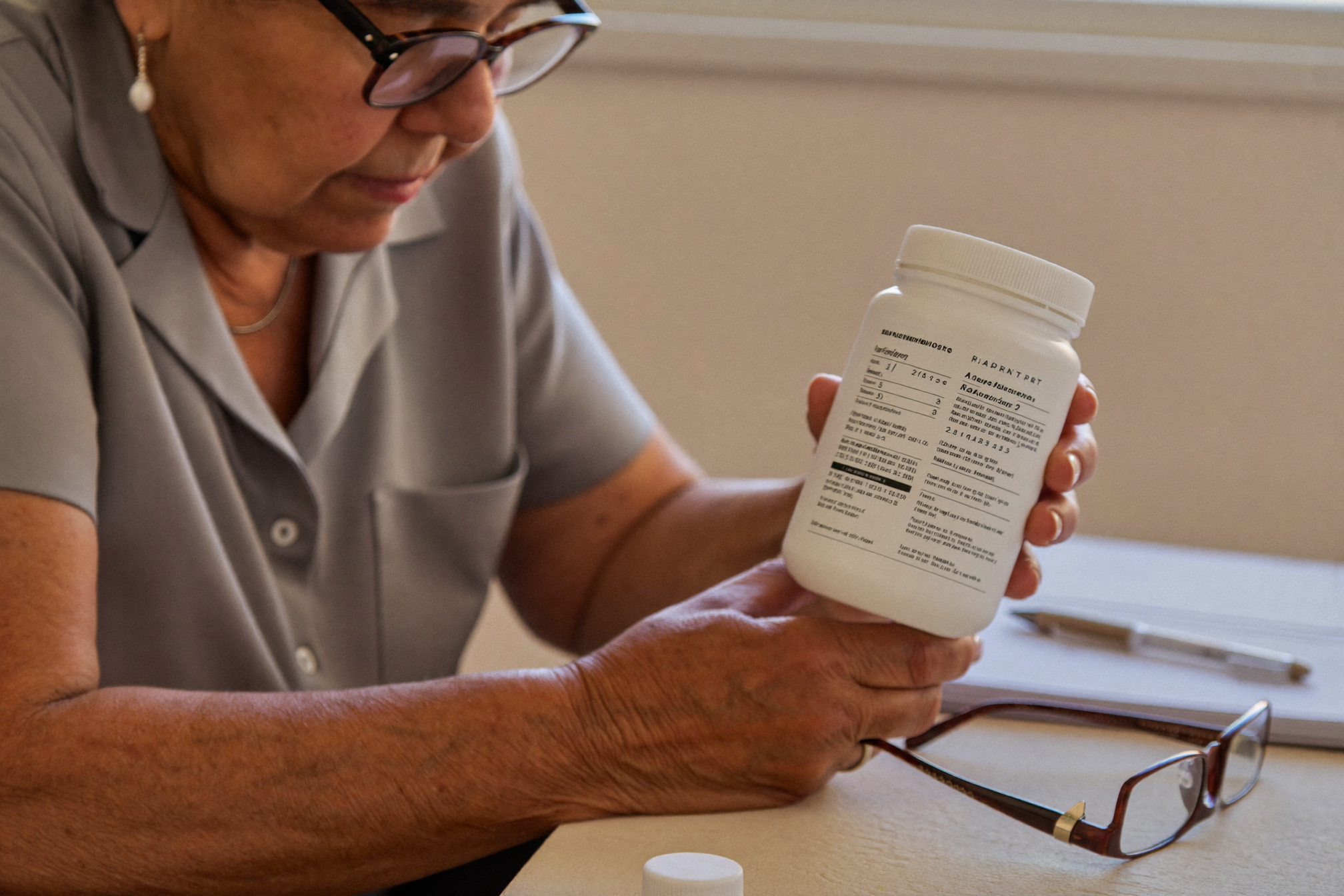
Testimonials are selected by the seller and are not evidence. The Supplement Facts panel is where the real information lives.
More transparent
- Named ingredients and amounts, or clear blend totals.
- Specific safety and medication cautions.
- A written refund policy and a real support contact.
Red flags
- Claims to cure, permanently fix or replace care.
- Fear-based claims without a cited source.
- Hidden subscription terms or vague formula disclosure.
3. Separate ingredient evidence from product evidence
This is the distinction most sales pages blur. An ingredient may have some research in a related context, yet the finished product—at its specific doses and combination—may never have been studied at all. A trustworthy review makes this explicit and tells you what an ingredient cannot establish, rather than implying that “studied ingredient” means “proven product.”
4. Calculate the real cost
Compare the total package price, shipping, the number of days each package supplies and the resulting cost per day. Check whether the advertised discount requires buying several bottles at once, and whether checkout signs you up for automatic reorders. A crossed-out “regular price” is a marketing device, not proof of value.
5. Read the guarantee before ordering
Find out when the refund period begins, how support is contacted, whether you must return bottles (used or empty), and what exclusions apply. Save the policy page and your order confirmation. A guarantee lowers purchase risk; it does not promise a health result, and a generous-sounding window is worthless if the return conditions are impractical.
Quick pre-purchase checklist
- Have I named my symptom pattern, or ruled out red flags with a clinician?
- Can I see the full label and understand the doses?
- Does the review separate ingredient research from product proof?
- Do I know my true cost per day and any autoship terms?
- Have I read and saved the refund policy?
Use the checklist on a real comparison
We apply these standards when comparing FemiCore and FemiPro: transparent label, cautious claims, total cost and written guarantee.
Frequently asked questions
Should a supplement replace pelvic-floor exercises or treatment?
No. A supplement is not a substitute for assessment or evidence-based care when symptoms warrant it.
Are more expensive bladder supplements better?
Not necessarily. Price reflects marketing and margins as much as quality. Judge cost per day against label transparency and the refund policy, not the headline number.
What is a “proprietary blend” and why does it matter?
It is a combined total for several ingredients without listing each amount. It limits your ability to judge whether any single ingredient is present at a meaningful dose.